Ongoing calciferous collaborations with marine organisms
Regenerating devastated coral ecosystems with life-supporting substrate
2004-present
Mineral accretion reefs can be any shape or size, allowing for original seascaping compositions. Both functional and artistic, they evolve into large aquatic topiary-like ecosystems. Rather than artworks about ecology that solely derive inspiration from nature and the environment, this is actually art as ecology designing relationships with vibrant living plants and animals. Low volt DC electricity flowing through seawater raises the pH locally to attract calcium carbonate and magnesium hydroxide minerals to deposit onto a metal matrix; corals readily cement to this natural substrate. They can grow faster and tolerate some environmental stress that normally bleaches or kills them. As more people become aware of the issues of sea level rise, climate change, pollution, and overfishing, it is our time to explore how to resuscitate our ocean biodiversity and protect our shores with interdisciplinary recoralization.
I'm developing an interactive, immersive multimedia exhibit correlating coral health with human health through the context of artificial respiration and innovative life support. Kinetic, responsive sculptures will interpret data from human participants and the ocean in juxtaposition with video and sound. Information on climate change in the abstract does not automatically correlate with empathy or engagement in solutions. I hope to raise people's sensitivity to other species and our interdependence. By translating participant and oceanic numerical data, the project not only quantifies results, but also enables us to see and feel our living connection with corals through our mutually breathing bodies.
Special thanks to Gossamer Fiber Arts for donating the community reef in the video. It has also exhibited in Washington, Massachusetts, and New York. Living Sea Sculpture work is made possible by generous support from over 400 kickstarter and razoo campaign backers, Sapling Foundation, The Harnisch Foundation, Bertha Philanthropies, Vesper Foundation, and an anonymous private donor.
Amphitrite and the Zoe Coral Restoration Sculpture
Zoe coral restoration growth. Cozumel Mexico, 2018. photo Jessica Rose ©
Zoe coral sculpture. Volunteers cleaning invasive algae. Cozumel MX 2018. photo Jessica Rose ©
Coral Skirt, Pemuteran Bali, 2014. Photo by Made Gunaksa
Closed-system experiments with SeaHorse Aquarium, Portland OR, 2011-2013. Clay Connally
Minerals depositing on rebar, SeaHorse Aquarium, 2011. photo Clay Connnally
Coral Grid Sculpture, Pemuteran Bali, 2004. Design Wolf Hilbertz. Photo Ari Spenhoff
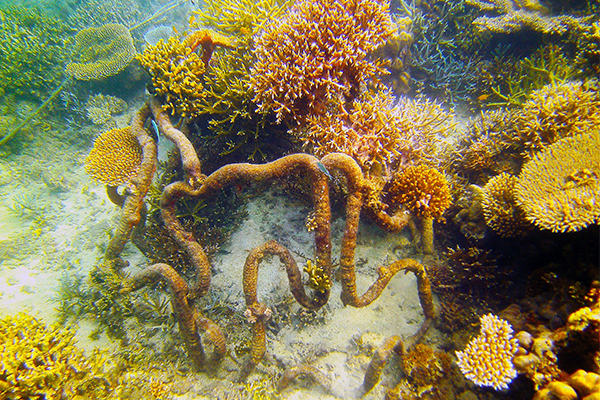
Coral Skirt, Pemuteran Bali, 2013. Three years growth. Photo Joey Foster Ellis
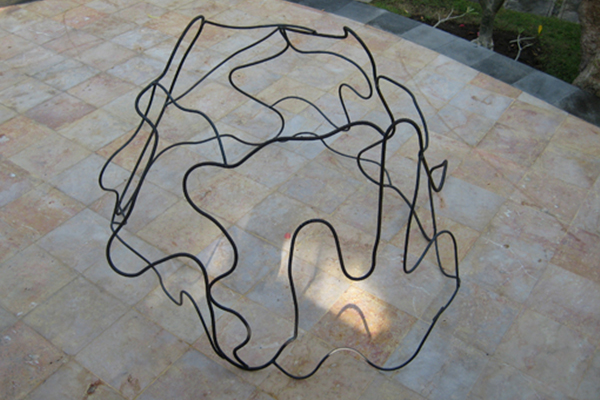
Coral Skirt, Pemuteran Bali, 2009. Pre-installation. Photo Colleen Flanigan
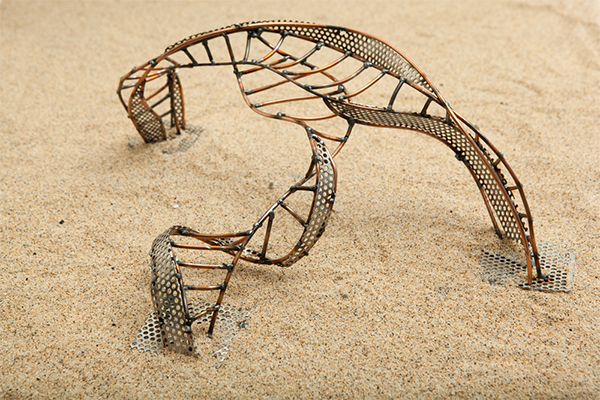
ZOE 1" scale model, 2011. Photo Clay Connally
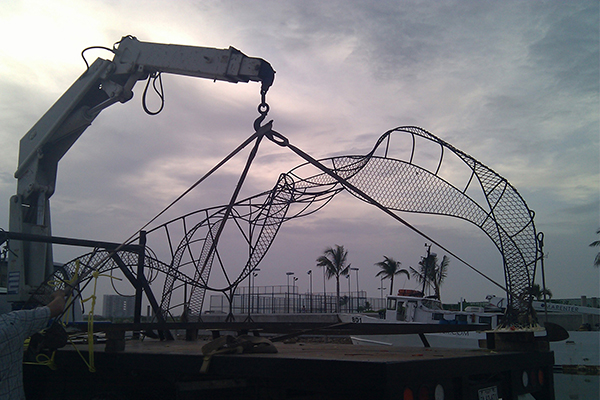
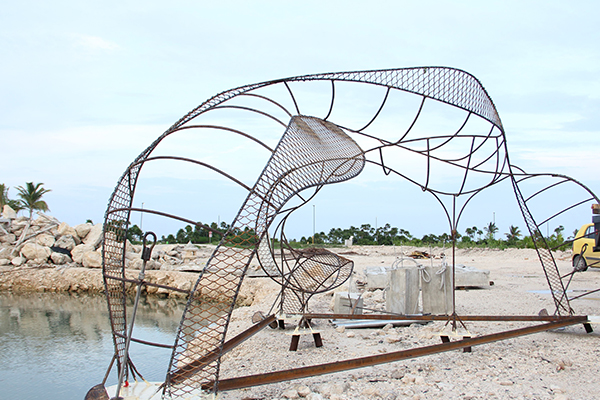
ZOE 15' x 9' x 6' steel, Cancun Mexico, 2011. Photo Colleen Flanigan
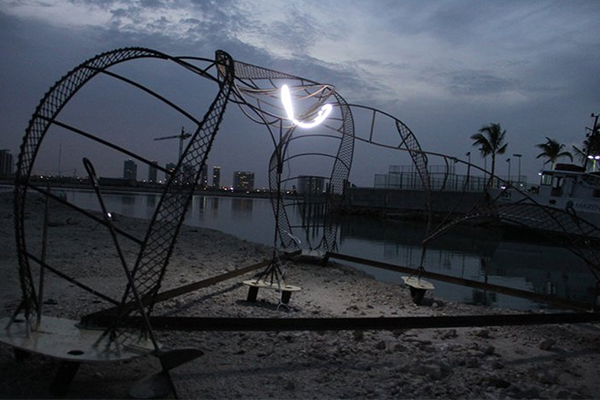
ZOE 15' x 9' x 6' steel, Cancun Mexico, 2011. Photo by Mike Gerzevitz
TEDxMonterey - Colleen Flanigan - Coral Restoration: Cultivating Mutual Symbiosis
Amphitrite at OMSI